

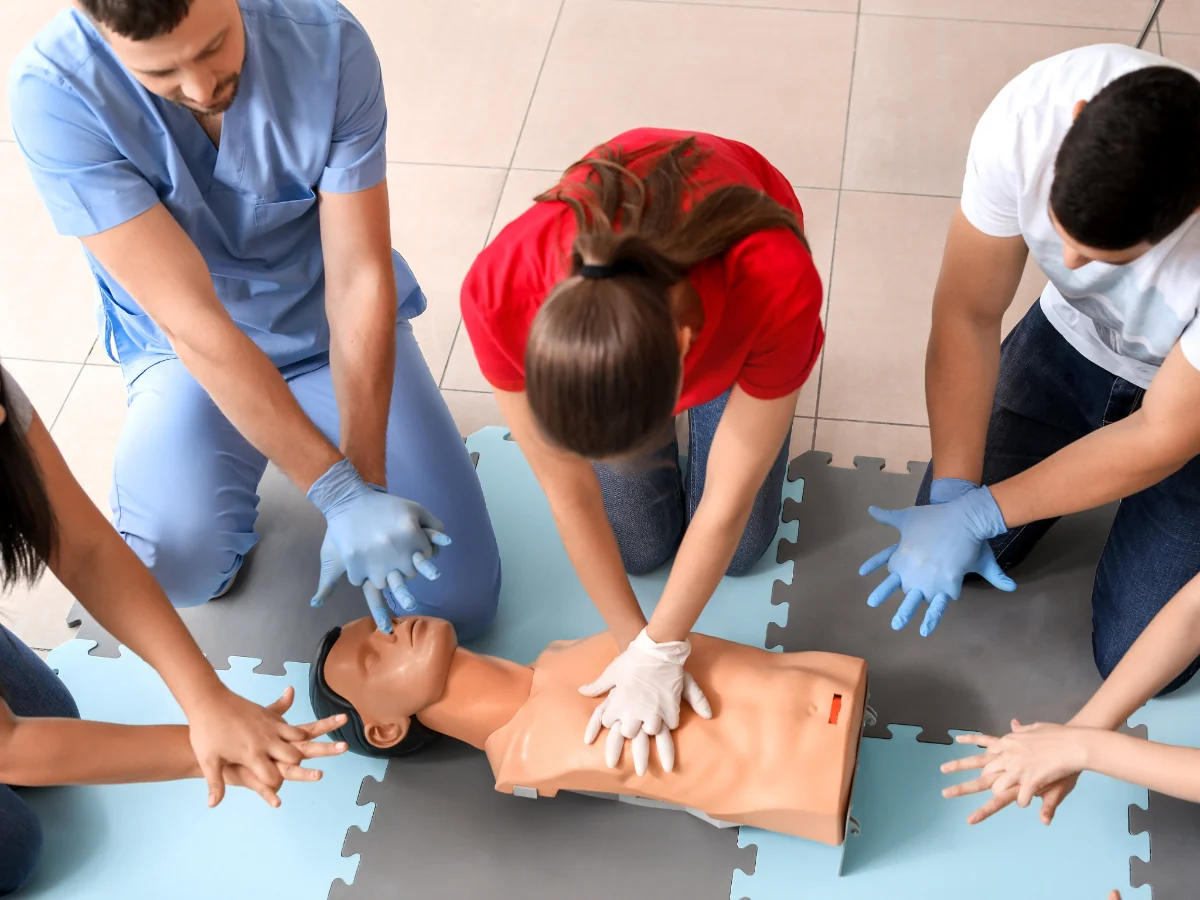
Cardiopulmonary resuscitation, commonly known as CPR, is a lifesaving skill that helps keep blood and oxygen flowing to the brain and vital organs when someone experiences cardiac arrest. Cardiac arrest can happen suddenly and without warning, which is why knowing what to do in those critical moments can truly save a life.
CPR is used when a person is unresponsive and not breathing normally. Acting quickly while emergency services are on the way can make a meaningful difference.
How to Perform CPR Step by Step
Step 1: Call 9-1-1 or ask someone nearby to call
If a person collapses or is unresponsive, call 9-1-1 immediately. If others are present, point to one person and clearly ask them to call 9-1-1 so you can begin care right away.
Step 2: Check responsiveness
Tap the person firmly on the shoulder and speak loudly. Ask if they are okay. Look for any movement or response.
Step 3: Check breathing
Look to see if the person is breathing normally. Occasional gasping is not normal breathing. If the person is not breathing or only gasping, begin CPR.
Step 4: Position the person
Lay the person flat on their back on a firm surface. Kneel beside their chest so you can apply steady pressure.
Step 5: Hand placement
Place the heel of one hand in the center of the chest on the lower half of the breastbone. Place your other hand on top and interlace your fingers. Keep your arms straight and position your shoulders directly over your hands.
Step 6: Begin chest compressions
Push hard and fast straight down in the center of the chest, allowing the chest to fully rise after each compression. Maintain a steady rhythm. A helpful reference is the beat of the song Stayin’ Alive.
Step 7: Continue until help arrives
Continue chest compressions until emergency responders take over, the person begins breathing normally, or you are physically unable to continue.
Step 8: Use an AED if available
If an automated external defibrillator is nearby, turn it on and follow the voice prompts. Continue compressions until the device tells you to pause. The AED will guide you on whether a shock is needed and what to do next.
Why CPR Training Matters
While hands-only CPR is effective for adults, formal CPR training provides additional guidance on rescue breaths, compression depth, and how to respond to different age groups. Learning CPR helps build confidence and prepares you to act in emergencies at home, at work, or in the community.
Being prepared to respond in a medical emergency is a crucial aspect of first aid awareness. While no one hopes to use CPR, knowing empowers you to help when seconds matter.
If you have questions about first aid, emergency preparedness, or injury care, Marque Urgent Care is here to support you. Our providers offer convenient walk-in care and guidance for urgent health concerns, helping you feel informed and confident in caring for yourself and those around you.

Favorite Platform
New Content